
 发表时间:2026-10-14
 资源来源:原创文章
 阅读次数:26 次
整合弗洛伊德与科胡特:钟杰副教授团队提出自体结构双维模型
——我院钟杰副教授团队在《Frontiers in Psychiatry》发表自体结构量表(SOSS)研究
近日,北京大学心理与认知科学学院钟杰副教授团队在Frontiers in Psychiatry(JCR Q2区)发表论文,提出自体结构双维模型并编制28条目自体结构量表(SOSS)。研究通过两项实证研究、四个独立样本、近6000名被试的系统检验,证实量表具有良好的信度与效度,该论文第一作者为我院博士生李欣怡。
精神分析内部对自恋的本质争论已久:弗洛伊德视自恋为心理能量投向自我;科胡特则认为自恋有独立发展线路,健康自恋源于早期关系中的镜映与理想化滋养。现有自恋量表(NPI、PNI)多测量外在行为表型,鲜有工具触及"自体内部如何组织"这一深层机制。
研究将自体结构拆解为两条独立维度:
自体投注(Self-Cathexis):心理能量投向自我的程度,承继弗洛伊德的自我-对象投注区分。
自体空间需要(Self-Space Need):维持自我完整所需的关系与心理空间,源于科胡特的镜像与理想化自体客体理论。
两个维度下含四个一阶因子:积极自体(9题)、自我中心(7题)负载于自体投注;理想化认同(5题)、脆弱自体(7题)负载于自体空间需要。
该研究采用两项研究、四样本设计,总样本5,887人。研究一(n=1,954)完成题项筛选与EFA,128人两个月重测;研究二样本3(n=2,570)完成CFA、ESEM、跨性别不变性与聚类分析,样本4(n=1,235)同时施测SOSS、NPI、PNI以检验聚合效度。
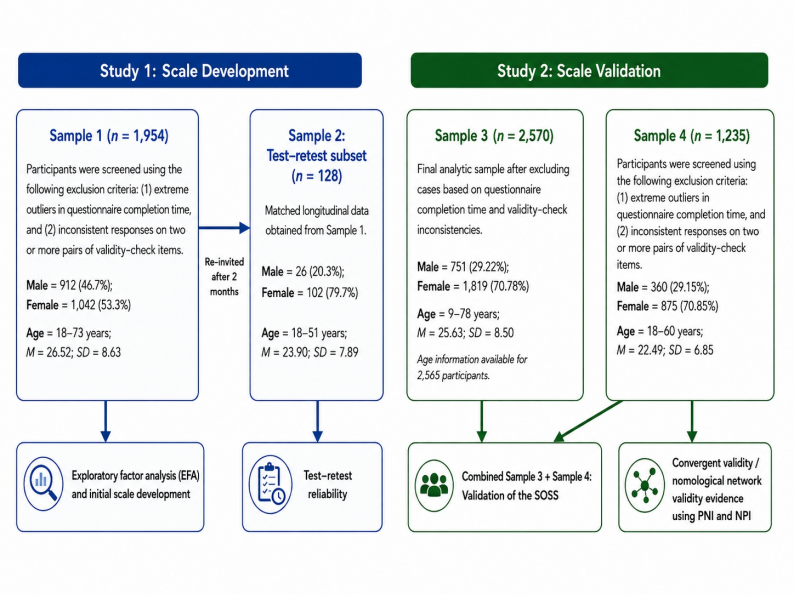
图1研究流程图:样本招募与数据分配
该研究的核心发现:
SOSS结构稳定:EFA提取四因子,累计解释51.9%方差;四因子ESEM模型拟合最优(CFI=.901, RMSEA=.059),表明自体结构是互联系统而非严格层级。
SOSS信度优良:总量表α=.795–.816,重测ICC=.870,四因子α为.657–.846;跨性别形态、度量、标度三层不变性均获支持。
SOSS效度明确:自体投注与NPI正相关(r=.180),与PNI无关;自体空间需要与PNI强相关(r=.644)。脆弱自体与PNI相关最高(r=.622),自我中心与NPI相关最高(r=.329),初步印证理论假设。
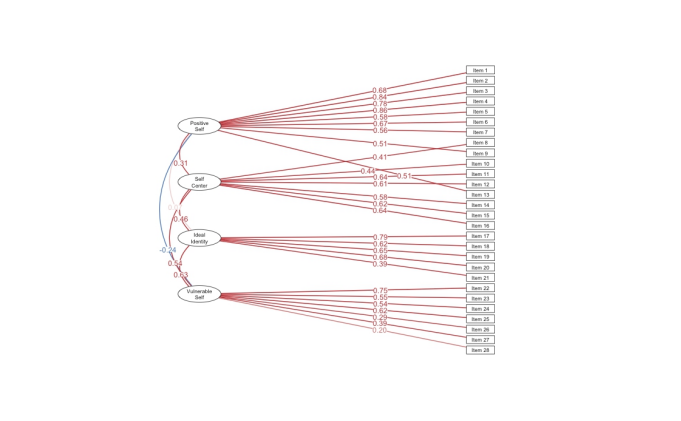
图4 SOSS四因子CFA模型(标准化载荷)
聚类分析识别四类人群:高投注-低需要型(n=1,152)、双高型(n=711)、低投注-高需要型(n=1,238)、双低型(n=704),均为连续空间中的趋势组合而非离散类型。
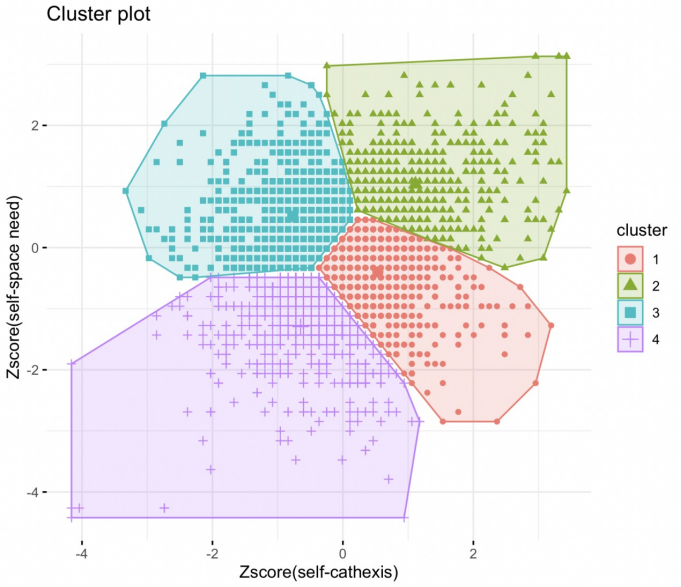
图5 四种自体结构配置的二维空间分布
意义与展望:
该研究将弗洛伊德与科胡特整合进入同一可量化框架——前者讲心理能量投入,后者讲关系土壤,二者是自体的两条坐标轴,可同时成立。SOSS首次将精神分析自体结构概念操作化为标准化测量工具,推动自体心理学走向实证,也为"计量精神分析"提供工具支撑。
研究团队客观指出:当前样本以国内非临床人群为主,采用横断自我报告设计,未来需在临床样本、纵向追踪与跨文化比较中继续完善。
结语
从百年前西格蒙德–弗洛伊德的临床洞察到70年前海因茨–科胡特的共情理解,再该研究团队近期的数据统计检验,精神分析思想正经历实证科学的淬炼。这项中国团队的工作为精神分析与现代心理测量搭建了一个桥梁,也展示了中国学者在人格病理学和计算精神分析学领域的原创贡献。
论文信息:Li, X., Zhong, J., Fan, S.-S., Yin, J.-Y., Gao, X., & Li, W. (2026). Frontiers in Psychiatry, 13, 1942305. DOI: 10.3389/fpsyt.2026.1942305
(撰稿:Echo Li 校对:钟杰)
Reconciling Freud and Kohut: A Decade-Long Program of Research on the Structure of the Self
A report on the work of Prof. Dr. Jie Zhong (Peking University), prepared by the International Psychoanalytical AssociationStudy Group inWuhan
For more than a century, psychoanalysis has carried within itself two partly competing accounts of narcissism. Sigmund Freud (1914) conceived narcissism as libidinal investment directed onto the self: a finite quantity of psychic energy, withdrawn from objects, that development was expected gradually to surrender to the external world. Heinz Kohut's self psychology (1971, 1977) later argued from a different clinical vantage point that narcissism follows its own developmental line, that its mature forms underpin ambition, ideals and creativity, and that much narcissistic suffering originates not in loving the self too much but in the failure of early mirroring and idealizing experiences to consolidate a cohesive self. For generations these framings have often been read as alternatives. A research team at Peking University, led by Prof. Dr. Jie Zhong, an IPA direct member and associate professor at the School of Psychological and Cognitive Sciences, has spent more than a decade arguing that they need not choose sides.
A question raised early, pursued slowly
Zhong's engagement with the clinical and theoretical problem of the self long preceded the present model. In 2011 he examined the tensions that arise when classical psychoanalytic ideas meet the expectations of Chinese patients, asking openly whether the cultural assumptions embedded in psychoanalytic technique can travel across cultural boundaries (Zhong, 2011). That early paper is best read not as a finished position but as the first step of a research arc: a sustained interest in how the self is organized, and how that organization can be understood both clinically and scientifically. The theoretical framework itself was formalized in two parts. The first, "On a theory of self-structure—Part 1: The nature of narcissism," appeared in this journal in 2023; the second, "The theoretical dimensions of self-structure," follows in 2026. The two papers, together with a newly developed measurement instrument, now constitute a deliberately cumulative body of work rather than a single position paper.
Two orthogonal axes, not a single line
The core proposal is that self-structure—defined as an innate, coherent subjective organization that shapes psychological experience—rests on two statistically orthogonal dimensions. The first, self-cathexis, inherits Freud's account: it is the degree to which libidinal (emotional) value is invested in the self, the metaphorical "existence-weight" a person grants themselves. The second, self-space need, inherits Kohut: it is the relational and psychological space a person requires in order to maintain cohesion and pursue development, the soil in which the self is held, mirrored and allowed to idealize. On this view, one dimension answers "how much do I value myself?" while the other answers "how much environmental and relational sustenance do I need to keep my sense of self intact?" The two are not opposite ends of one scale; they vary independently.
Density, four configurations, and clinical illustration
Their ratio forms self-structure density—the essence of narcissism on this account—which distinguishes "solid" from "void" narcissism and organizes self-structure into four quadrants. The model is explicitly not a typology: most people occupy the continuous middle ground, and the quadrants describe tendencies rather than fixed diagnoses. Part 2 illustrates the framework with two clinical cases. Celia, a sixteen-year-old with borderline personality features, and Zoe, a twenty-two-year-old woman with a history of emotional deprivation, both typify void narcissism, yet they sit in different configurations of the two axes—showing, as the author argues, why two patients who look superficially similar at the level of symptoms may differ profoundly in their internal organization. The theoretical claim is that symptom clusters (diagnoses) and the deep organization of the self belong to different dimensional systems, and that conflating the two has limited both clinical understanding and measurement.
Bringing clinical concepts to measurement
A long-standing criticism of self psychology has been that its insights, rich as they are clinically, have proven difficult to translate into quantitative research. Zhong's team has addressed this directly. In 2026 they published the Self-Structure Scale (SOSS; Li, Zhong, Fan, Yin, Gao, & Li, 2026) in Frontiers in Psychiatry: a 28-item instrument built on the bidimensional model, with four first-order factors—positive self, egocentricity, idealized investment, and vulnerable self—loading onto the two higher-order dimensions. Across two studies and four independent samples totaling 5,887 participants, the team reported acceptable internal consistency, test–retest reliability (ICC = .87), a four-factor structure supported by ESEM, measurement invariance across gender, and correlations with existing narcissism measures consistent with the theoretical expectations: grandiose (NPI) correlates more strongly with self-cathexis, while vulnerable/pathological narcissism (PNI) correlates more strongly with self-space need. The authors are careful to state the limits: samples were drawn from non-clinical Chinese populations, the design is cross-sectional and self-report, and clinical, longitudinal and cross-cultural validation remain ahead.
A cross-cultural grounding
Characteristic of this program is its refusal to treat psychoanalytic concepts as settled imports. Part 2 opens with a story from China's Warring States period and draws explicitly on Watsuji's ethics of human milieu and Heidegger's being-in-the-world, as well as on Klein, Winnicott and the object-relations tradition, in arguing that "space" has long been an untheorized dimension of selfhood. The intent is not eclecticism but location: to show that a properly psychological account of self-space can be reached from more than one intellectual tradition, and to set up the cross-cultural questions that a universalizing clinical theory must eventually answer.
The value of the long arc
What distinguishes this work is less any single finding than the discipline of the arc itself: an early question about culture and technique (2011), a systematic theoretical statement in two parts (2023, 2026), and a measurement instrument tested in nearly six thousand participants—each stage building on the last, each limited acknowledged in its turn. In an era of short, individual publications, this is a program built for accumulation: theory first, then instruments, with clinical observation, psychometrics and cross-cultural inquiry held in deliberate tension. The model remains provisional, and its clinical and cross-cultural claims are not yet fully tested. Yet as an example of how concepts born in the consulting room can be carried, step by careful step, into systematic empirical dialogue, it offers a method that other researchers may adapt and contest.
References
Li, X., Zhong, J., Fan, S.-S., Yin, J.-Y., Gao, X., & Li, W. (2026). The construction and psychometric evaluation of the self-structure scale: A bidimensional model of self-structure. Frontiers in Psychiatry, 17, Article 1942305. https://doi.org/10.3389/fpsyt.2026.1942305
Zhong, J. (2023). On a theory of self-structure I: The nature of narcissism. Psychoanalysis and Psychotherapy in China, 6, 15–36. https://doi.org/10.31234/osf.io/753yp
Zhong, J. (2026). On a theory of self-structure II: The theoretical dimensions of self-structure. Psychoanalysis and Psychotherapy in China, 9(1/2) 65–88.
Zhong, J. (2011). Working with Chinese patients: Are conflicts between Chinese culture and psychoanalysis? International Journal of Applied Psychoanalytic Studies, 8(3): 218–226.
Prepared by the IPA Study GroupinWuhan, October 2026.
On a theory of self-structure—Part 2:
The theoretical dimensions of self-structure*
Jie Zhong
ABSTRACT
This article, rooted in psychoanalytic traditions including Freud’s libido theory and Kohut’s self psychology, and extending the author’s prior work, proposes the bidimensional self-structure theory. Defining self-structure as an innate, coherent subjective organization shaping psychological experience, the theory identifies two statistically orthogonal core dimensions: self-cathexis (libidinal self-investment, metaphorical “existence-weight”) and self-space need (subjective developmental space demand, metaphorical “existence-volume”). Their ratio forms self-structure density, the essence of narcissism, which distinguishes solid narcissism (high density) and void narcissism (low density) and categorizes self-structures into four quadrants. Two clinical cases—Celia (a sixteen-year-old with borderline personality disorder, low self-cathexis + high self-space need) and Zoe (a twenty-two-year-old with emotional deprivation, low self-cathexis + low self-space need), both typifying void narcissism—validate the model’s efficacy in explaining pathological self-structural heterogeneity.
The theory bridges the theoretical gap between Freud’s (1914c) classical psychoanalytic model of narcissism and Kohut’s (1971, 1977) self psychology model, synthesizes insights from major psychoanalytic schools, and clarifies that pathological diagnoses (symptom clusters) and self-structure (the deep organizational framework of the self) pertain to distinct dimensional systems. It outlines future research directions: identifying falsifiable clinical cases to test theoretical boundaries, conducting quantitative research to operationalize core constructs, and exploring cross-cultural perspectives on selfhood via Chinese philosophical thoughts.
Keywords: Self-structure, narcissism, self-space need, self-cathexis.
Introduction
A well-documented historical event in ancient China—the attempted assassination of the King of Qin (Qin Shi-Huang) by Jing Ke—provides contextual insight into this theoretical discussion (Liu, c. 77 BCE, cited in He, 1990). In 227 BCE, amid the Warring States Period, Jing Ke—entrusted by the Prince of Yan to halt Qin’s conquest—attempted to assassinate Qin Shi-Huang (later the First Emperor) alongside Qin Wuyang, a reputedly brave envoy said to have killed adversaries at 12. When the pair presented a tribute (a box holding Yan’s map) to the king, Qin Wuyang’s visible fear aroused official suspicion. Jing Ke apologized, explaining the northern frontier native’s terror at facing the “Son of Heaven,” and the king ordered him to present the map. As the map unfurled, a concealed dagger was exposed, triggering the assassination attempt—but Qin Shi-Huang, already vigilant due to Qin Wuyang’s fear, evaded harm, and Jing Ke was executed. (pp. 1193–1194)
This historical account offers a conceptual lens to explore “self-density”—a core concept from the author’s prior work (Zhong, 2023). However, as a 2,250-year-old event, it lacks verifiable evidence to infer Qin Wuyang’s specific inner experiences. From the narrative, the reputedly courageous Qin Wuyang lost access to his brave “selfobject” when confronting Qin Shi-Huang, ancient China’s most authoritative figure.
An alternative interpretation is that Qin Shi-Huang’s overwhelming imperial majesty compressed Qin Wuyang’s psychological “self,” exposing insufficient self-structure density—a construct conceptualized as the core essence of narcissism in the present theoretical model (Zhong, 2023). The core self is hypothetically analogous to a cell nucleus (or DNA), possessing an internal organizational structure not directly perceptible; in contrast, narcissism, as a closely linked “phenotype,” acts as an observable window into the underlying self-structure.
Psychoanalytic research has increasingly centered on the “self,” exploring its ontogenetic origin, development, differentiation, and structural organization. Freud (1914c) established the foundation for understanding early self-structure with his linear narcissism model in classical psychoanalytic theory—an approach later highlighted by Hartmann (1950) for emphasizing libidinal self-cathexis. Post-Freud, the object relations school positioned object relations as the core origin of self-development, shifting focus from classical drive theory to the pivotal role of early caregiving environments. Kohut (1971, 1977) extended ego psychology’s focus by expanding the “self” construct beyond the ego, integrating key methodological insights from psychoanalysis (notably the object relations school). Building on this, he developed self psychology’s core “bipolar self model” for conceptualizing self-structure, proposing two core selfobject needs—mirroring and idealizing—as the primary drivers of self-development. This framework revised classical psychoanalytic psychodynamic assumptions about self-development, which were originally rooted in narcissism.
Building on the author’s prior work on self-structure (Zhong, 2023), this article further clarifies two core propositions: (1) self-structure encompasses dual biological/instinctual and social/environmental attributes; and (2) narcissism serves as the key “phenotype”—a biological analog referring to observable traits reflecting underlying structural features—for understanding self-structure. This integrated theoretical perspective clarifies the internal dimensions of self-structure.
The definition of self-structure
This study’s theoretical exploration of self-structure is rooted in psychoanalytic traditions while advancing through critical theoretical reorientation. Within classical psychoanalytic frameworks, pioneers like Freud distinguished the ego (a reality-adaptive personality component) from the self (a broader personal identity construct). Later, ego psychology founder Hartmann (1950) clarified that the self acts as the object’s counterpart—not a subset of the ego—conceptualizing it as a “whole subject” with inherent adaptive capacities.
Building on this foundation, self psychology founder Kohut (1977) reconstructed the self-concept more thoroughly, positing that self-structure development hinges on “selfobject experiences”: in early development, the self lacks autonomous psychological function and thus relies on mirroring and idealizing responses from significant others to maintain structural stability. Within this framework, pathological narcissism stems from self-structural deficits—such as Kernberg’s (1975) “horizontal splitting” and “vertical splitting,” terms describing defensive fractures in self-organization—that disrupt the coherent integration of self-representations.
Within the present theoretical framework, “self-structure” is defined as an innate organizational framework integrating diverse self-relevant components that underpin the coherence and dynamism of an individual’s psychological experience. This study further conceptualizes it as a “coherent subjective organization”—encompassing the self’s emotional, cognitive, and metacognitive dimensions—rooted in genetic predispositions and life experiences, with early object relationships as a pivotal contextual factor. Critically, self-structure has inherent temporal (developmental continuity) and spatial (experiential consistency) continuity.
Functionally, it forms the core of an individual’s psychological world, integrating stable value systems, key motivational sources, and core aspirations, and retains three essential properties: (1) plasticity (adaptability to contextual changes), (2) integrity (cohesion of self-related components), and (3) reflexivity (the capacity for self-awareness and self-evaluation).
It is reasonable to hypothesize that self-structure comprises distinct dimensions acting as the endophenotypes of narcissism—latent, trait-linked psychological features underpinning observable phenotypic expressions (e.g., narcissistic behaviors) in clinical and empirical research. Within the present theoretical framework, narcissism is conceptualized as the “density” of libidinal self-investment, a metaphorical construct shaped by two statistically orthogonal dimensions: (1) “self-cathexis,” the metaphorical weight of libidinal energy directed at the self; and (2) “self-space need,” the metaphorical volume of subjective developmental space an individual actively seeks (Zhong, 2023).
The density of self-structure denotes the interactive integration of libidinal self-cathexis intensity and subjective self-space need within the self-structure. As a core indicator of self-organizational coherence, psychological resilience, and intrinsic psychic energy stability, it embodies the core quantitative and qualitative features of narcissism—manifested as the self-structure’s capacity to remain intact and free from pathological dissociation under external stress or trauma. This definition integrates Freud’s libido theory and Kohut’s self psychology (taking libidinal cathexis as the intrinsic energetic foundation and self-space need as the external developmental carrier), unifying the self-structure’s functional and structural attributes while resolving theoretical conflicts between the two schools regarding narcissism.
In summary, self-structure is conceptualized as a dynamic, context-responsive psychic organization shaped by the reciprocal interplay of internal libidinal cathexis and external selfobject interactions. Investigating self-structure empirically and theoretically requires integrating temporal (lifespan developmental trajectories) and spatial (inherent self-organizational dimensions) perspectives—an approach that generates novel insights into normative personality functioning and the phenotypic expressions of pathological narcissism.
The concept of self-space need
Self-space need refers to the “volume” dimension of self-structure, denoting the subjective developmental space an individual seeks from the early caregiving environment. As an independent dimension to self-cathexis, it jointly determines the libidinal self-investment “density”—the new definition of narcissism proposed here (Zhong, 2023). This concept underscores the subjective aspiration for developmental space, which shapes the self’s structural organization and dynamic processes.
Self-space need is not merely physical or external, but rather the psychological and subjective space an individual deems essential for personal growth, self-cognition, and the development of a stable self-structure. For instance, those with a high self-space need often seek new experiences, challenges, or relationships to expand their sense of self, such as pursuing further education, taking on leadership roles, or engaging in creative activities to fulfill this developmental need.
The concept of self-space need has historical roots in psychological and philosophical thought. Descartes (1641) posited that a separation between the material res extensa and the thinking res cogitans; the self, as a non-extended entity of the latter, possesses its own existential realm. While he did not explicitly reference self-space need, his ideas laid the groundwork for subsequent explorations of the self’s nature and its relation to the external world, implying the self inhabits a non-physical, mental “space” distinct from the material world’s physical space.
In the field of psychoanalysis, post-Freudian object relations theory highlights the role of early relationships in shaping the inner psychological world, with key contributions from Klein (1946) and Winnicott (1960). Klein’s focus on early object relations in self-formation points to the criticality of the psychological space such relationships provide for self-development—for example, a nurturing, responsive, mother–infant bond fosters the “space” for a healthy infant self. Winnicott’s (1960) “holding environment” also aligns with self-space need: this caregiver-created psychological and physical space enables children to explore and develop their self-identity, serving as an early childhood fulfillment of such need.
Heidegger’s (1927) existential philosophy is also relevant: his notion of being-in-the-world implies the self exists within a spatio-temporal context. While he emphasized the temporal dimension of existence in Being and Time, his work inspired Watsuji (1935) to examine the self’s spatial aspect. Watsuji argued that the meaningful self encompasses both individual and social modes of being-in-the-world, with space being an integral component of the self-concept. He highlighted a subjective space—distinct from scientists’ abstract space—that connects to self-space need, as it is the realm where individuals experience and develop their self-concepts (Watsuji, 1935).
In conclusion, self-space need is a pivotal concept for understanding self-structure, integrating insights from diverse philosophical and psychological traditions to underscore the importance of subjective space in self-development. Considering this concept enhances our understanding of how individuals pursue growth, form self-identity, and relate to the external world. Future psychological and psychoanalytic research could further explore the concept itself, its measurement, and its impacts on key psychological phenomena including personality development, mental health, and interpersonal relationships.
The dimensions of self-structure
Assuming self-cathexis and self-space need as two statistically independent (orthogonal) dimensions, a bidimensional self-structure theory can be constructed. This framework provides a stronger explanation for theoretical inconsistencies in the field and is consistent with phenomenological observations, as detailed in the author’s previous work (Zhong, 2023).
Clinically, identical levels of self-inflation (high self-space need) or libidinal self-cathexis manifest as distinct symptoms and resilience due to variations in self-structure density. Density thus serves as the core criterion for distinguishing “void narcissism” from “solid narcissism” and explains why some individuals retain psychological integrity under severe trauma while others experience self-disintegration—a phenomenon unexplainable by single dimensions of self-cathexis or self-space need, justifying the logical necessity of introducing self-structure density.
Self-cathexis—the intrinsic energetic meta-dimension of the self-structure, derived from Freud’s libido theory—underpins all self-functions (e.g., self-esteem regulation, self-identity, psychological resilience) and self-related processes (e.g., self-representation, object relations). A self-structure without such libidinal investment becomes an “empty self”, violating the fundamental prerequisite for its existence. Self-space need, the external developmental meta-dimension rooted in object relations theory and Kohut’s selfobject theory, provides the space for self-psychic energy expression, development, and integration. Libidinal energy from self-cathexis requires interaction with external objects/environments within this space to mature the self-structure; without it, energy falls into repression or pathological inflation. The two dimensions are indispensable and non-substitutable: self-cathexis alone cannot explain divergent narcissistic phenotypes (e.g., grandiose vs vulnerable narcissism with identical libidinal investment), while self-space need alone cannot account for self-development deficits (e.g., unmet development despite high space need due to insufficient self-cathexis). Thus, the two-dimensional framework is theoretically necessary to explain self-structure and narcissism.
Regarding the bidimensional self-structure model (Figure 1), three core hypotheses are proposed as follows:
(1) The primary goal of self-cathexis is to achieve the self’s metaphorical existence-weight, addressing the core question of the self’s status—e.g., whether one occupies the center of one’s perceived world. This metaphorical weight corresponds to the stability of intrinsic self-worth and the capacity for consistent libidinal cathexis towards the self. It is reflected in stable self-esteem and the ability to maintain a coherent identity without external validation. Low self-cathexis manifests clinically as fragile self-esteem, excessive sensitivity to external judgment, libidinal withdrawal from the self, and a persistent sense of emptiness.
In contrast, self-space need aims to secure the self’s metaphorical existence-space—that is, a greater subjective volume, addressing the question: “Do I perceive myself as sufficiently substantial?” The ratio between these two dimensions jointly defines the self’s existence density, a metaphor corresponding to the subjective experience of psychological strength or fragility.
Figure 1: A bidimensional model of self-structure.
This volume dimension reflects the scope of an individual’s sought-after self-development, self-expression, and social engagement. Clinically, it manifests as the degree of demand for external attention, idealized selfobjects, and developmental opportunities. High volume is marked by intense longing for external validation and strong desire for expressive space; low volume involves suppressed developmental needs, interpersonal withdrawal, and compressed self-space.
(2) The motivation of self-cathexis aligns with Freud’s concept of libido—the psychic energy directed towards life preservation and relational aims. By contrast, the intrinsic motivation underlying self-space need originates from Freud’s death instinct (Thanatos), associated with drives towards tension reduction and defense against psychological disintegration. It is also closely linked to Klein’s (1946) notion of persecution anxiety: the fear of being overwhelmed or annihilated by threatening internal or external objects.
Early caregivers’ ability to satisfy an individual’s self-space need—which is unique, varying with developmental stages and temperament—determines two key outcomes: whether the individual attains sufficient psychological satisfaction, and whether the self establishes an individualized internal need-satisfaction balance with external objects. In this view, libido and the death instinct do not conflict. Instead, their relationship mirrors the yin-yang concept in Taoist philosophy: complementary, interdependent forces that coexist and continuously move towards dynamic equilibrium.
(3) To date, despite ongoing debates about the psychodynamics of self-development, phenomenological research on narcissism and psychoanalytic inquiries into self-structure have both focused predominantly on the self’s “volume” (metaphor for perceived developmental space). For example, narcissism is chiefly defined by self-inflation (regardless of origin), with insufficient attention to the self’s “density”—the critical distinction between a solid self and a void self.
A critical question thus arises: “Why is attention to the self’s density necessary?” This focus derives from a foundational insight: the core properties of the self are shaped not only by its volume (perceived developmental space) but, more crucially, by its density—the coherence and resilience of self-organization.
Within this model, self-density—a metaphor for the coherence and resilience of self-organization—shows no linear association with mental health or Kernberg’s (1975, 1986) levels of personality organization. Rather, self-density represents a distinct conceptual dimension within a three-dimensional theoretical framework.
Specifically, individuals across different levels of personality organization may display similar self-density. For example, those with borderline personality organization (BPO)—marked by fragmented self-representations and emotional lability—can even show higher self-density than individuals with neurotic personality organization (characterized by more integrated functioning). A typical example is Kernberg’s (1975, 1986) malignant narcissism (antisocial profile): despite being pathological, their self-structure often maintains stronger coherence (higher self-density) than some neurotic individuals.
Consistent with this theoretical proposition, self-density can vary significantly even among individuals classified as psychopathic. For instance, Francis Underwood (from House of Cards) and Tom Ripley (from The Talented Mr. Ripley) differ sharply in self-density, a distinction rooted in the coherence of their self-organization and the stability of their internal motivational systems. Notably, using self-density as an analytical lens provides a theoretical explanation for a key clinical observation: why some individuals endure extreme psychological pressure, whereas others suffer psychological collapse under similar stress—even when their self-volume (perceived developmental space) is comparable.
An analogy from physical properties illustrates this distinction: a dense solid lead ball and a hollow balloon may have identical volume, yet differ greatly in pressure resistance. This reflects the theoretical proposition that self-density (coherence and resilience of self-organization), rather than mere volume, determines an individual’s ability to withstand external pressure.
Integrating self-density into the theoretical study of self-structure improves model fit across both normative and pathological self-types. Within the bidimensional self-structure model, self-density allows classification of self-structures into two broad categories: solid narcissism and void narcissism. Solid narcissism is defined by high self-density, whereas void narcissism is characterized by a weak self—a core feature that remains consistent regardless of surface-level adaptive or impaired functioning. Figure 2 depicts the theoretical distribution of solid narcissism and void narcissism within the bidimensional self-structure model.
Within the bidimensional self-structure model, there are theoretically four distinct quadrants that categorize self-structures based on the two core dimensions—“self-cathexis” (X-axis) and “self-space need” (Y-axis).
(1) The first quadrant corresponds to the “high self-cathexis (X-axis) + high self-space need (Y-axis)” type. Theoretically, this quadrant encompasses two primary subgroups: most individuals with “adaptive narcissism” (a construct analogous to “healthy narcissism” but more clinically precise, though not identical) and individuals with inflated yet functionally intact self-structures (encompassing both “solid narcissism” and “void narcissism” subtypes).
A consensus exists among scholars that even high-functioning narcissistic individuals exhibit a degree of unrealistic self-enhancement. This cognitive bias often leads them to perceive themselves as underappreciated in interpersonal contexts and to endorse a sense of personal superiority. Concurrently, they typically demonstrate diminished interpersonal empathy and exhibit a propensity to exploit others to satisfy their need for power and sense of dominance.
Notably, this quadrant may also include a theoretically postulated “optimal self-structure” subgroup (conceptually distinct from the vague “Superman” characterization). Individuals in this subgroup possess robust ego functioning, high psychological resilience, and congruent high internal and external self-esteem. Unlike narcissistic individuals, their self-enhancement is grounded in realistic self-appraisal, enabling them to attain high social status and prestige through adaptive means in real-world contexts.
(2) The second quadrant corresponds to the “low self-cathexis (X-axis) + high self-space need (Y-axis)” type. Theoretically, this quadrant constitutes a primary domain for most “void narcissists,” as low self-cathexis deprives the self of metaphorical “existence-weight,” while high self-space need amplifies the perception of a “large yet hollow” self-volume—creating the defining “low-density self” characteristic of void narcissism.
Within this quadrant, “vulnerable narcissists” emerge as the most prototypical subgroup, distinguished by fragile self-esteem, hypersensitivity to rejection, and a persistent fear of inadequacy. Another representative subgroup includes individuals with high-functioning BPO—a clinical construct defined by partial integration of self-representations—who experience significant interpersonal distress and exhibit prominent narcissistic features (Kernberg, 1986).
Developmentally, chronic repression of self-cathexis in early infancy leads individuals to suppress primitive narcissistic energy as a defensive strategy to avoid further psychological trauma. Yet such defensive suppression disrupts internal self-balance, leaving them overly dependent on external validation for self-worth. They seek a sense of power from the external world and attempt to confirm self-value through constant craving for fusion with idealized, admiring others—ultimately failing to differentiate between the self and idealized selfobjects (Kohut, 1971). For example, individuals in this subgroup may equate others’ admiration and attention with their own inherent abilities; their self-evaluation is inherently unstable, as the loss of external praise readily triggers profound self-doubt.
Furthermore, deficits in acquiring self-soothing capacities from early caregivers often leave these individuals prone to severe emotional dysregulation: they frequently experience overwhelming anxiety, depression, and anger, with limited ability to regulate emotions autonomously. Empirically, a large body of research has consistently linked vulnerable narcissism to various mood disorders—including major depressive disorder and generalized anxiety disorder—as well as chronic negative psychological distress (Ellison et al., 2013; Kaufman et al., 2020; Miller et al., 2018).
(3) The third quadrant corresponds to the “low self-cathexis (X-axis) + low self-space need (Y-axis)” type, which can be conceptualized as the “depressive personality subtype” within the model. The majority of individuals in this quadrant exhibit a “relationship-deprived self”—a consequence of the gradual attenuation of self-space need (and its associated object-related strivings) across development—and typically present with an attachment style characterized by dismissive avoidance (a term from attachment theory describing emotional withdrawal to avoid perceived rejection, distinct from the vague “de-attachment” referenced earlier).
Notably, while the metaphorical self-volume of this subtype is compressed (attributable to low self-space need), self-density is not inherently reduced. However, individuals with severe chronic depression (i.e., major depressive disorder with persistent symptoms) or dysthymia (persistent depressive disorder (PDD))—a clinical condition marked by long-standing low mood—often exhibit profound “psychological emptiness” and a weakened self. This is primarily driven by diminished self-cathexis (i.e., reduced libidinal investment in the self), which erodes the coherence of self-organization.
Historically, this self-structure subtype has been largely overlooked in traditional narcissism research—fields that have long prioritized the study of grandiose or vulnerable narcissistic phenotypes. Nevertheless, it is a readily observable pattern in clinical practice, particularly among patients presenting with chronic low mood and interpersonal detachment.
(4) The fourth quadrant corresponds to the “high self-cathexis (X-axis) + low self-space need (Y-axis)” type, with its extreme end aligning conceptually with Kernberg’s (1986) characterization of “malignant narcissism.” Individuals in this extreme subgroup exhibit a profound lack of interpersonal empathy, a persistent pattern of interpersonal exploitation, and overt aggressive tendencies—with a significant subset meeting clinical criteria for psychopathy (a condition marked by callousness, impulsivity, and disregard for social norms).
From the model’s self-density framework, this self-structure exhibits the highest theoretical self-density: high self-cathexis (X-axis) provides substantial metaphorical “existence-weight,” while low self-space need (Y-axis) minimizes metaphorical self-volume. Given that self-density is conceptualized as the ratio of “existence-weight” to “self-volume,” this combination yields the maximum density within the bidimensional system—manifesting as a rigid, highly coherent (yet pathological) self-organization.
Notably, this quadrant underscores a key theoretical proposition: “solid narcissism” (defined by high self-density) spans a spectrum, encompassing both relatively adaptive subtypes (e.g., the “optimal self-structure” noted in quadrant 1) and severely pathological variants (e.g., malignant narcissism in this quadrant). This spectrum aligns with existing clinical observations (e.g., case studies of malignant narcissism) and non-clinical empirical findings (e.g., assessments of adaptive vs pathological high-self-density traits), reinforcing the model’s explanatory consistency with real-world data.
In the author’s first article, “On a theory of self-structure—Part 1: The nature of narcissism” (Zhong, 2023), two case examples—Mr. H and Mr. Zhao—were presented to illustrate how distinct narcissistic subtypes correspond to self-structures located in different quadrants of the bidimensional self-structure model. Specifically, Mr. H exhibited a self-structure characterized by both narcissistic traits and humility, with internal coherence; Mr. Zhao, by contrast, displayed an “entity-type” narcissistic self-structure marked by innately robust self-cathexis (note: “self-catharsis” in the original text is revised to “self-cathexis” to align with the model’s core dimension).
Building on this foundation, the present article seeks to further elaborate on the bidimensional self-structure model through an analysis of two additional clinical cases derived from clinical practice—using concrete clinical phenomena to verify the model’s explanatory power and applicability.
Clinical examples
Celia
Celia was first clinically assessed at the age of sixteen, presenting with frequent self-harm, suicide attempts, and emotional dysregulation—symptoms that led her to seek treatment. Apart from her adolescent status at initial evaluation, she fully met DSM-5 (APA, 2013) diagnostic criteria for borderline personality disorder (BPD).
Celia’s mother is a chief executive officer with a highly controlling interpersonal style, who co-founded a business with Celia’s father. As the eldest child, Celia resided mainly with her mother but was primarily raised by her maternal grandmother, who functioned as her primary attachment figure and central caregiver during early development. A clinically significant developmental observation was that Celia’s grandmother regularly exposed her to crime investigation and analysis television programs. Clinical interviews confirmed that such consistent exposure repeatedly evoked intense fear and anxiety in Celia. Between the ages of two and three, Celia suffered a life-threatening severe intestinal infection requiring emergency medical intervention to stabilize her condition—a near-fatal medical event in early childhood.
Throughout her childhood, Celia’s mother maintained a strict parenting style, imposing explicit requirements for Celia to learn to play the piano (a non-negotiable expectation rather than a voluntary activity). At eight years old, Celia’s younger sister was born, marking a notable shift in the family dynamic. At nine, Celia reported that her teachers’ attitudes towards her underwent a distinct change: transitioning from initially warm, affirming, and attentive to frequent criticism and overly stringent demands. Concurrently, she noted that teachers no longer provided her with sufficient opportunities to demonstrate her strengths (e.g., academic achievements, extracurricular talents)—opportunities she had regularly received prior to this shift. (Only as an adult did Celia discover that this shift in teacher attitude occurred because her mother specially asked the teacher to implement “frustration education” for her.)
Following this series of changes (sibling birth, teacher attitude shift), Celia developed clinically significant social anxiety symptoms: she persistently feared interpersonal harm from others (e.g., rejection, criticism, or emotional hurt), with the sole exception of her parents.
During Celia’s first year of middle school (aged twelve), her persecutory fears (a clinical symptom characterized by intense, unfounded anxiety about being harmed or threatened by others) became so prominent that she began routinely carrying a knife to school for “self-protection”—though she consistently reported during clinical interviews that she never used or brandished it.
Notably, Celia described her parents as demonstrating emotional neglect towards her: they appeared solely focused on her academic performance and showed little attentiveness to her emotional experiences, distress, or the persecutory fears she had begun exhibiting. This pattern of emotional unresponsiveness persisted through critical developmental stages.
At the age of thirteen, Celia made an impulsive suicide attempt by jumping from the third floor of a building. She survived uninjured, as the fall was buffered by an intermediate shelter and a soft grassy landing below—details corroborated by her account and collateral information. A striking illustration of her parents’ emotional neglect emerged immediately after this attempt: when Celia returned home through the front gate, her parents failed to notice her recent trauma or physical state. Instead, their only reaction was to ask casually when she had left the house.
Starting in middle school, Celia imposed extremely high, self-critical standards on her own academic performance—a pattern where, despite dedicating the majority of her daily time to studying, she consistently perceived herself as unable to complete academic tasks to her self-defined “perfect” standard. This unrelenting pressure and feelings of inadequacy ultimately led her to withdraw from high school due to overwhelming academic distress (i.e., persistent feelings of being unable to cope with academic demands, paired with intense self-criticism).
At the time of her initial clinical evaluation (when she sought treatment), Celia had been out of school for one year. Over the course of this one-year period, her father accompanied her on travels, with the explicit goal of supporting her psychological recovery from the distress that had contributed to her school withdrawal.
Following the completion of a comprehensive clinical evaluation and diagnostic assessment for Celia, the treatment approach selected was psychodynamic therapy grounded in object relations theory—a framework focused on addressing relational patterns and internalized object representations, which aligned with her clinical presentation (e.g., attachment-related distress, persecutory fears).
During the first two years of treatment, Celia experienced a period of significant clinical instability, and the therapy team supported her through this challenging phase. Over this period, she had two episodes of school re-withdrawal (after previous attempts to re-engage with education) and engaged in multiple instances of wrist-cutting self-harm, with two of these episodes deemed clinically severe (requiring medical attention or intervention to address acute risk).
By the third year of treatment, a follow-up clinical diagnostic reassessment revealed that Celia—now an adult (consistent with age-based diagnostic criteria for personality disorders, as per DSM-5)—no longer met the diagnostic criteria for BPD. Critically, she also ceased exhibiting suicidal ideation or self-harming behaviors, marking a substantial reduction in clinical risk and improvement in self-regulatory capacities.
By the fourth year of treatment, Celia continued to exhibit residual symptoms (persistent mild symptoms not fully resolved) and impairments in social and occupational functioning. Specifically, these manifestations included the following: (1) frequent insomnia, attributed to ongoing emotional sensitivity and lability (i.e., rapid, unpredictable shifts in mood) as well as dysregulated sleep–wake cycles (poorly structured daily routines affecting sleep quality); (2) episodes of paranoid ideation (unfounded suspicions about others’ intentions or potential harm) triggered by exposure to information about cyberbullying or social incidents—events that were not directly involving or targeting her personally. During these episodes, she would significantly reduce her frequency of leaving home and limit social interactions with others; (3) persistent feelings of emptiness (a sense of inner void or lack of purpose) and shame (intense self-criticism or embarrassment about her perceived shortcomings); and (4) unemployment and ongoing inability to live independently as an adult (e.g., reliance on family support for housing, daily living expenses, or decision-making).
Clinical observations during later therapy sessions indicated that two core areas required ongoing therapeutic focus for Celia: her persistent feelings of shame and her sense of self-inadequacy (a more clinically precise framing of “self-weakness,” aligning with her underlying experience of a fragile self-concept).
While Celia no longer met the diagnostic criteria for BPD—marking a significant clinical milestone—her therapeutic journey was not yet complete. Ongoing intervention remained necessary to address these residual emotional patterns (shame and self-inadequacy) and to further support the consolidation of adaptive self-functioning (e.g., building self-compassion, strengthening self-efficacy), which are critical for long-term psychological stability and improved quality of life.
Celia’s case not only illustrates the general pathogenic mechanism of BPD but also highlights how an individual’s self-structure shapes its pathogenic process. Theoretically, “void narcissism”—a core construct in the present model—is consistently associated with implicit feelings of shame and a fragile self-concept (i.e., the “weak self” observed in Celia). Within the framework of the bidimensional self-structure model proposed in this article, Celia’s self-structure can be localized to the second quadrant (low self-cathexis + high self-space need), a domain that typifies “void narcissism”. This alignment is consistent with her clinical presentation: low self-cathexis manifested as a lack of internal “existence-weight” (e.g., fragile self-esteem, self-doubt), while high self-space need manifested as a desperate pursuit of external validation to fill an internal “void” (e.g., overreliance on others’ approval, sensitivity to rejection).
Notably, Celia’s self-structure does not represent all individuals with BPD. Clinically, we also observe BPD cases with “solid narcissism” (e.g., individuals with BPD who exhibit rigid self-confidence, minimal self-doubt, and pathological grandiosity)—indicating that BPD encompasses distinct self-structural subtypes. This observation is supported by recent quantitative research findings (Wang, Li, & Zhong, 2024; Wang et al., 2024), which empirically validate the heterogeneity of BPD in terms of underlying self-structure.
These findings collectively underscore a key theoretical proposition: pathological diagnoses (e.g., BPD) and self-structure do not occupy the same “spatial dimension” but belong to distinct dimensional frameworks. Pathological diagnoses primarily describe clusters of symptomatic behaviors (e.g., emotional dysregulation, self-harm in BPD), while self-structure describes the deeper, organizing framework of the self (rooted in dimensions of self-cathexis and self-space need). Only by adopting a multidimensional perspective—integrating both diagnostic symptom clusters and self-structural dimensions—can we fully capture and explain the complexity of clinical phenomena, avoiding oversimplification of heterogeneous psychiatric conditions like BPD.
Zoe
Zoe was twenty-two years old and unmarried at the time of her initial clinical evaluation. During her first clinical encounter, she had recently graduated from the School of Economics at a private university. She attended the initial appointment accompanied by her mother.
In the first therapy session, Zoe’s mother remained present and took the initiative to speak first. She expressed urgent concerns about Zoe’s disordered eating behaviors—the core issue that prompted the family to seek clinical help. Key clinical and physical information collected at this stage included: (1) Zoe’s height was approximately 185 cm; (2) over a six-month period, she experienced severe and rapid weight loss, dropping from 90 kg to 65 kg; (3) she had developed secondary amenorrhea—a clinical term referring to the cessation of previously regular menstrual cycles, which is a common physiological complication of severe weight loss and underlying disordered eating.
Zoe was raised in a family in North China. Her father held a position as a local government official, and her mother initially worked as a factory worker before later establishing her own business. During clinical interviews, Zoe provided detailed accounts of her feelings towards her parents, which included the following key observations.
Regarding her mother: Zoe described her mother as prone to hysterical outbursts (a term reflecting Zoe’s subjective perception of her mother’s intense, unregulated emotional expressions) and noted that her mother often exhibited unpredictable mood swings at home.
Regarding her father: Zoe reported that her father had a volatile temper—he typically suppressed his anger in external settings (e.g., at work) and redirected this pent-up anger towards family members when at home. She further disclosed that he had physically assaulted her on occasion without apparent provocation (i.e., without a clear trigger or justification). Zoe also recalled feeling consistently ignored by her father during her childhood. Later, she discovered that she could gain his attention by opposing or resisting his demands; however, this attention almost exclusively took the form of criticism from him. Zoe emphasized that this pattern—seeking attention through opposition only to receive criticism—left her with intense feelings of self-deprecation.
Shortly after Zoe’s birth (when she was two to three months old), her mother returned to work due to heavy job responsibilities and hired babysitters to care for her. However, Zoe’s maternal grandmother deemed the babysitters lacked sufficient responsibility, so she stepped in to become Zoe’s primary caregiver during this early developmental stage.
When Zoe was two-and-a-half years old, she was enrolled in a kindergarten. According to Zoe’s account during clinical interviews, she cried nearly every day at kindergarten and was consistently the last child to be picked up by her mother. She explicitly described this period of her childhood, stating: “When I was little, my mother rarely spent time with me—I really lacked physical affection (e.g., hugs) from her.”
One of Zoe’s earliest memories, shared during therapy, dates back to when she was three years old (still attending the same kindergarten). She recalled feeling profound loneliness in the absence of her parents, which often made her cry. On one specific occasion, this loneliness led her to attempt to run away from the kindergarten in a desperate effort to find her mother on the streets—an act reflecting her unmet need for parental proximity and emotional security at the time.
Zoe recounted a second early memory from when she was three to four years old, which occurred during her time in kindergarten. She recalled finding a piece of candy in the kindergarten yard; shortly after, another girl approached her, and Zoe explicitly expressed a desire to play with this peer. The girl responded by making a conditional offer: “If you give me the candy, I will play with you.” After Zoe gave her the candy, the girl erupted into taunting laughter and said, “I cheat you! This is my candy now! I don’t want to be friends with you!”
This betrayal left Zoe feeling deeply hurt—she described it as an experience of intense emotional distress, marked by feelings of rejection and disappointment. She further elaborated on her broader social experience in kindergarten, noting, “During my time there, I rarely had peers who wanted to play with me—I often felt left out and alone.”
Zoe described a rare positive early memory from her childhood: during her young years, she spent time in her grandmother’s garden—her primary source of comfort at the time—and recalled searching for butterflies there, accompanied by a distinct sense of peace and joy. This memory stood out as one of the few experiences she associated with emotional safety and contentment in her early life.
Separately, Zoe recalled that at the age of three, she had an aggressive intrusive thought: she fleetingly thought of cutting her father’s ears with a pair of scissors. Clinically, this thought is likely a manifestation of the accumulated anger and distress she felt towards her father, stemming from his history of unprovoked physical assault, emotional neglect, and redirection of external anger towards family members—reflecting a young child’s limited ability to process or express intense negative emotions in adaptive ways.
Aged four, Zoe also remembered getting into a conflict with her younger female cousin over a doll. She explicitly noted, “I always want to get the best one!” This statement hints at a pattern of striving for exclusivity or dominance when competing for desired objects—a behavior that may have developed as a compensatory response to her chronic unmet emotional needs (e.g., inconsistent attention from her parents, lack of secure emotional attachment), where securing “the best” object became a way to seek a sense of control or validation she otherwise lacked.
From the ages of four to six, Zoe was consistently physically forced by her father to attend kindergarten; on occasions when she resisted (expressing reluctance to go), her father would physically assault her—a pattern that extended his history of using violence to control her behavior, as previously reported.
At six, Zoe enrolled in primary school, where she was required to eat lunch on campus daily. She recounted this period with distress, stating: “No one would let me sit with them at lunch—they’d even avoid going to the lunch table if I was there!” This experience left her feeling profoundly socially isolated, a continuation of the peer rejection she first encountered in kindergarten and a source of ongoing emotional distress during her early school years.
By the age of eight, Zoe had developed a maladaptive coping strategy to avoid school: she began pretending to be ill. Notably, she reported that she successfully feigned appendicitis—a deception that led to her being admitted to the hospital and undergoing an unnecessary surgical evaluation (and potentially a surgical procedure, by her account).
Zoe recounted a specific incident from her middle school years: on one occasion, she went out to buy cucumbers and brought them home, only to find that the cucumbers were spoiled and rotten. She stated, “I perceived that the vendor had deceived me. Upon learning of this, my father confronted the vendor, became involved in a heated altercation with him, and threw the spoiled cucumbers directly at him.”
In contrast to her father’s reaction to this incident, Zoe reported that her mother had socialized her from early childhood onward to engage in ingratiating behavior towards others. She recalled her mother’s explicit instruction: “If someone were to slap my left cheek, I was expected to offer them my right cheek and ensure their contentment—because our ability to survive depended entirely on maintaining these interpersonal relationships.”
Zoe first experienced weight gain during her middle-school years, at approximately twelve years of age. Subsequently, she became aware of her classmates whispering about her. She recounted, “They whispered that I was too fat!”
She further reported, “I attempted to lose weight twice during high school and continued to struggle with my weight throughout college. At times, when I felt lonely and sad, I would eat large amounts of food. Eating helped me feel better—while eating, I experienced a profound sense of warmth and containment.”
During high school, Zoe developed symptoms of insomnia. She was unable to fall asleep at night and described “worrying about every aspect of my life.” The insomnia was severe and distressing to the point that, at times, she experienced suicidal ideation.
During college, and later while studying abroad as a graduate student, Zoe would engage in prolonged walking until she was physically exhausted following episodes of binge eating, as a means of compensating for calorie intake.
In the initial sessions of the psychoanalytic treatment, Zoe recounted numerous experiences of social isolation dating back to her kindergarten and primary school years.
She described: “I endured ten years of social isolation from kindergarten through primary school. No one would play with me—even in primary school, my peers refused to let me join them at the lunch table! I would pretend to have appendicitis to avoid going to school. Even after entering high school, I still found myself wishing that I would develop some form of cancer. At times, I would suddenly feel as though I were trapped in an ice hole—no one was there with me!”
Upon hearing Zoe’s account, I experienced a profound sense of sympathy for her. I endeavored to contain and hold this sorrow, entering into her experience of loneliness with my own affective response. In that moment, I found myself rendered speechless—much like an infant in the pre-verbal phase, overwhelmed by intense, unbearable affective states yet unable to articulate them. It seemed to me that the only way to respond to her in that moment was with the following: “Yeah, I can feel this loneliness, this sadness, and this sense of social isolation. It is truly unbearable.”
Subsequent to engaging with these unbearable affective states, Zoe appeared noticeably more buoyant in subsequent treatment sessions. She reported developing an interest in psychoanalysis and what she described as “mysterious affective experiences.” She further disclosed that she exhibited a stronger attachment to inanimate objects than to interpersonal relationships. Notably, she wrote an English poem that struck me as deeply evocative and aesthetically resonant, which she shared to articulate her emotional state at the time. This poem elicited complex affective responses in me—a blend of sorrow, loneliness, peace, and a sense of oneness with nature. Zoe clarified that the poem was her way of expressing her loneliness, yet also her experience of joyful unity with the natural world.
Of clinical note, following this verbalization Zoe abruptly expressed a desire to share meals and beverages with another person (I inferred that she was implicitly referring to sharing a drink with me at this moment), alongside a wish to be cared for and attended to. She then elaborated on her feelings towards her Buddhist teacher, whom she described as exuding gentleness and warmth. From my clinical vantage point, it appeared that in her subjective experience at this time, she perceived our therapeutic relationship as akin to soulmates in a honeymoon phase.
In subsequent treatment sessions, Zoe disclosed that she had experienced a traumatic incident involving Dr. S—a prominent psychodynamic therapist. She recounted that Dr. S had invited her to work as a translator for a psychodynamic training program, yet abandoned her upon the program’s completion and informed her that she was “very sick.” This incident re-activated her historical trauma. From my clinical perspective, at this juncture, the only intervention I could offer her was to simply be present with her and serve as a witness to her lived experience.
From my observation, Zoe subsequently exhibited increased insecurity relative to prior sessions. She engaged in compulsive attendance at numerous psychology courses at a university she was visiting. Furthermore, she entered into a sexual relationship with a Caucasian psychiatrist who was visiting China. She also compelled herself to perform 100 kowtows in her apartment. I found myself feeling anxious about her acting-out behaviors and overwhelmed by a sense of helplessness.
In the following day’s session, I took the opportunity to explore these themes with her when she shared the following: “I sent an email to a professor to express my desire to join her research lab. I hoped to find a sense of belonging. Yet I also knew that devoting oneself fully to a single pursuit is not worthwhile—it feels like a form of self-deception. Nature inherently follows its own laws, and everyone is bound to a set of roles.”
Then, I asked her: “How about us?”
Zoe responded: “We are seeking truths about the self and the world. We are pursuing a sense of oneness with nature! I admit I still have certain desires—for instance, sharing meals and being close to another person. I wish to be with you because I cannot bear being alone with myself all day long. I want to fall in love with someone who can care for and accompany me.”
I then inquired further: “So, what are your feelings towards me?”
Zoe replied: “I am deeply grateful to you because you accept me for who I am—you do not see me merely as a patient.”
From my observation, Zoe demonstrated increased capacity to explore her early traumatic experiences and associated affective states in subsequent sessions following this dialogue. She articulated a broader range of affective experiences, including coldness, despair, social isolation, feelings of powerlessness, anger, and rage. She described feeling confined within a glass vessel and an urgent desire to shatter this container. At times, she reported feeling trapped in a vacuum-like void, overwhelmed by unbearable fear in the face of what she termed “absolute quiet emptiness.” She further disclosed an inability to perceive my presence during sessions, stating: “You are in a fog, shrouded in shadow—I cannot reach or grasp you. I feel despair, trapped in a vacuum.”
Zoe then disclosed a recurrent fantasy she experienced: “At times, I feel as though I can escape this vacuum-like vessel, falling down to its very bottom. There, I find an exit that leads to a place blanketed in snow-white pear blossoms.”
I inquired of her: “Is there anyone with you in this pear blossom grove?”
Zoe replied: “No one is there—only me.”
I prompted further: “Where do I fit into this scene? Do you have any fantasies about this?”
Zoe responded: “You are not in the grove itself, but you are the closest person to this pear blossom grove—you are the witness to this world.”
In subsequent sessions over the following days, Zoe began communicating with me in English, stating that she felt unable to articulate herself fully in Chinese. She disclosed a desire to find an idealized father figure and to idealize him. Additionally, she expressed a hope of receiving genuine attunement from her academic supervisor—not as a patient, but as a person in her own right. She reported, however, that this hope remained unfulfilled.
Amid this profound sense of loneliness, Zoe sought to cultivate a sense of peaceful oneness within herself by donning Buddhist attire as a means of shielding her psychic self. Frankly speaking, I was deeply moved by her efforts, as well as her evocative poetry imbued with a poignant beauty of sadness. This has prompted me to reflect on a philosophical question deeply rooted in Chinese cultural discourse: “Where is the way of the end of the self?”
I found the psychoanalytic work with Zoe to be exceptionally challenging. In this article, I do not aim to elaborate on Zoe’s case formulation or the course of analytic treatment in detail, instead I focus on examining the structure of Zoe’s self and its defining characteristics.
Reflecting on Zoe’s case, the first concept that comes to mind is the “deprived self”—a term I even contemplated using as the title of my original clinical manuscript. A review of Zoe’s developmental history reveals clearly that her early childhood was marked by pervasive emotional maltreatment, and she experienced severe deprivation in the domain of object-related needs, or more precisely, her object-related needs were almost never adequately attuned to. This compelled her to enter into so-called “loving relationships” through masochistic forms of emotional barter. This pattern of “emotional barter,” however, progressively eroded her sense of self—leading her to grow increasingly distrustful of the external world and to retreat into unending fantasies. Within her poignant fantasy worlds, human figures are absent as relational objects, with all idealizing projections directed towards the fantasized plants and landscapes in her inner world. Within this lonely, interpersonally barren inner fantasy realm, I discern a reflection of the “neglectful and depriving environment” of Zoe’s early developmental years.
Zoe’s symptomatology further embodies the inherent contradictions of her self-structure: the compulsive needs to “fill the self” by “stockpiling food”—a metaphor for emotional sustenance that remains psychically indigestible—gives rise to a sense of powerlessness and profound shame within the self, which in turn prompts self-punishment through severe compulsive behaviors.
Zoe’s sole coping mechanism is to dissociate from these aversive affective states via fantasy. Fortuitously, she is able to externalize her fantasies and inner world through poetic expression. From a theoretical perspective, situating Zoe within my bidimensional self-structure theory reveals that she occupies the third quadrant—the “deprived and depressed self”—which falls within the domain of “void narcissism.”
Discussion
To date, based on advances in personality theory within the field of psychoanalysis (Kernberg, 2004, 2016; Lingiardi & McWilliams, 2017; Tyrer, 2010), a comprehensive model of personality structure should encompass at minimum three core components: levels of personality organization, types of personality organization, and self-structure. The bidimensional self-structure model proposed in this article lays the necessary groundwork for the development of a higher-order, multidimensional model of personality structure in future research.
To clarify the bidimensional framework’s theoretical justification and dimensional selection, its relationship with other self-related constructs is elaborated as follows: (1) Self-esteem stability: a derivative of self-cathexis “weight” and self-space need “volume” matching—high–high matching fosters stable self-esteem, while high need with low cathexis mismatch causes fragility (see the core driver of Celia’s fragile self-esteem). (2) Self-representation integration: depends on whether libidinal self-cathexis can integrate within self-space need; insufficient cathexis leads to fragmentation (e.g., borderline personality disorder), consistent with Kernberg’s self-fragmentation theory. (3) Object relations quality: outcomes from self-space need-external object interaction, which reciprocally influences self-cathexis (healthy relations strengthen cathexis; pathological relations trigger libido withdrawal/over-cathexis). It thus functions as a mediating variable, not a core meta-dimension.
Regarding dimensional boundaries, this study focuses on intrinsic self-structure dimensions to explicate narcissism’s essence and pathological mechanisms, selecting “intrinsic energy/external development” over external variables (e.g., environment, object relations) to preserve model parsimony and core explanatory power—aligning with the scientific principle of parsimony. This demarcation clarifies the model’s intrinsic core and unifies psychoanalytic schools’ insights for personality structure research.
From a theoretical perspective, beyond Freud’s classical psychoanalytic framework—specifically, theories of personality structure and personality dynamics—three additional schools have made seminal contributions to the understanding of human personality. The bidimensional framework of self-cathexis and self-space need, together with the central dimension of self-structure density proposed in the present study, constitutes an integrative construct built upon classical psychoanalysis, self psychology, and object relations theory. Its core value lies in explaining the essence of narcissism and the pathological heterogeneity of self-structure through a minimal meta-dimensional framework. It remedies the clinical phenomena that cannot be elucidated by Freud’s linear model and Kohut’s bipolar model, and provides a theoretical foundation for the quantitative research and clinical differentiation of self-structure.
To use a metaphor: if human personality is likened to a castle, a classical Freudian analyst would enter the castle and analyze its structural architecture by assessing the id, ego, and superego; analysts from the ego psychology school focus on observing the castle’s defensive capacities, that is, the types of external stressors its defenses can withstand; the object relations school examines the castle’s building blocks—namely, object representations; and self-psychology resembles entering the castle to investigate its foundational underpinnings, with a focus on the characteristics and core structure of the basic self.
These four schools collectively advance personality understanding and enable comprehensive clinical case formulation. In practice, these theoretical frameworks collectively serve to conceptualize human personality across multiple dimensions: structure (encompassing levels of personality organization, types of personality organization, and self-structure); the dynamics of intrapsychic forces; and the environmental influences (i.e., object relations) on personality development. Furthermore, the involvement of the self—which, once it attains a degree of stability and autonomy, functions as an independent psychic unit—in interpersonal and intrapsychic interactions constitutes not only a manifestation of an individual’s self-functioning but also an expression of their resilience and creativity.
When juxtaposed with Freud’s linear model of personality structure and Kohut’s bipolar model of narcissism, the bidimensional self-structure model proposed in this article offers a more nuanced understanding of the phenomenological manifestations of self-structure and demonstrates greater “fit”. Specifically, this model addresses four key theoretical gaps:
(1) It explains theoretically why two grandiose self-structures with comparable “volume” may exhibit differing “density”—that is, why some individuals with grandiose narcissism are internally “frail” while others are “full”.
(2) It elucidates the relationship between malignant narcissism and healthy narcissism by demonstrating that two self-structures with identical “weight” may have distinct “volumes”. The dimensional self-structure model allows the deduction that healthy narcissism possesses a larger “capacity” to accommodate object relations.
(3) The model identifies two potential clinical subtypes of self-deficiency: the empty/depressed self, and the deprived self (characterized by a compressed existential space). While this article does not elaborate on the latter, it is theorized to fall under the category of psychopathy, or alternatively, Cluster A personality disorders as defined in the DSM-5.
(4) Finally, the model lays a theoretical foundation for understanding the frail or empty self observed in certain neurotic patients.
From a psychodynamic perspective, this model affords a framework for the dualistic coexistence of the two fundamental drives—libido and Thanatos—which map onto the corresponding axes of self-cathexis and object-related needs. In doing so, it resolves theoretical tensions between Freud and Kohut by elevating these constructs to higher-order dimensional frameworks.
Logically, this article cannot use clinical cases to “prove” this theoretical model. As a scientific discipline, psychoanalysis—despite the inherent disciplinary particularities of its methodology—cannot deviate from the core scientific principle of “falsifiability”. In light of this, it is necessary to further identify and demonstrate the interpretability (within the framework of this model) of cases that were previously unexplainable by historical theoretical models. Additionally, this theoretical model requires the incorporation of quantitative research to further investigate and refine it.
Psychoanalysis has long pursued a core theoretical objective: to theoretically elucidate the nature of the self and the laws governing its development. It seeks to address a foundational question: “How does a person’s ‘self’ originate, and what constitutes its essential characteristics?” While psychoanalysis has long grappled with and addressed the question of “where the self begins,” it has yet to systematically engage with the question of “where the self ends?” This question cannot be reductively answered by invoking “death” alone—at its core, this oversight stems from the need to confront the philosophical inquiry of “where the self goes?”
Chinese cultural thought offers a novel perspective on this unaddressed question. For instance, the ultimate existential aspiration in Chinese philosophy is not merely “ashes to ashes, dust to dust” (a purely physical dissolution of the self), but rather “harmony between humanity and nature”—a state of spiritual fusion and reconnection with the natural order (Zhong, 2011). This cross-cultural dimension of selfhood promises to be a fruitful area for future psychoanalytic research.
References
American Psychiatric Association (2013). Diagnostic and Statistical Manual of Mental Disorders (5th edn). Washington, DC: American Psychiatric Publishing.
Chinese Psychological Society (2018). The code of ethics for counselling and clinical practice of Chinese Psychological Society. Acta Psychologica Sinica, 50(12): 1–8.
Descartes, R. (1641). Meditations on First Philosophy, J. Cottingham (Trans.). Cambridge: Cambridge University Press, 1996.
Ellison, W. D., Levy, K. N., Cain, N. M., Ansell, E. B., & Pincus, A. L. (2013). Vulnerable narcissism and personality disorder features: The role of self-esteem instability and contingent self-esteem. Journal of Personality, 81(2): 169–184.
Freud, S. (1914c). On narcissism: An introduction. S. E., 14: 67–102. London: Hogarth.
Hartmann, H. (1950) Comments on the psychoanalytic theory of the ego. Psychoanalytic Study of the Child, 5: 74–96.
Heidegger, M. (1927). Being and Time, J. Macquarrie & E. Robinson (Trans.). New York: Harper & Row, 1962.
Kaufman, S. B., Lee, J. Y., Capron, D. W., & Hagemeyer, B. (2020). Narcissism and emotional functioning: A meta-analytic review. Personality and Social Psychology Review, 24(4): 342–376.
Kernberg, O. F. (1975). Borderline Conditions and Pathological Narcissism. New York: Jason Aronson.
Kernberg, O. F. (1986). Factors in the psychoanalytic treatment of narcissistic personalities. In: A. P. Morrison (Ed.), Essential Papers on Narcissism (pp. 213–244). New York: New York University Press.
Kernberg, O. F. (2004). Aggressivity, Narcissism, and Self-Destructiveness in the Psychotherapeutic Relationship. New York: Yale University Press.
Kernberg, O. F. (2016). What is personality? Journal of Personality Disorders, 30(2): 145–156.
Klein, M. (1946). Notes on some schizoid mechanisms. International Journal of Psychoanalysis, 27: 99–110.
Kohut, H. (1971). The Analysis of the Self. Madison, WI: International Universities Press.
Kohut, H. (1977). The Restoration of the Self. New York: International Universities Press.
Lingiardi, V., & McWilliams, N. (Eds.) (2017). Psychodynamic Diagnostic Manual, Second Edition (PDM-2). New York: Guilford Press.
Liu, X. (Comp.) (c. 77 BCE). Strategies of the Warring States (Zhan Guo Ce). In: J. Z. He (Annot.), Annotations to the Strategies of the Warring States (Zhan Guo Ce Zhu Shi) (pp. 1193–1194). Beijing: Zhonghua Book Company, 1990.
Miller, J. D., Maples-Keller, J. L., Lynam, D. R., & Campbell, W. K. (2018). Vulnerable narcissism: A review and synthesis of emerging research. Personality Disorders: Theory, Research, and Treatment, 9(2): 101–111.
Tyrer, P. (2010). Personality structure as an organizing construct. Journal of Personality Disorders, 24(1): 14–24.
Wang, Q., Fang, H., Wong, O. L., Li, Z., Wang, Z., Chen, Y., & Zhong, J. (2024). Subtypes of borderline personality features in adolescence: Insights from cross-lagged panel network analysis. Personality Disorders: Theory, Research, and Treatment, 15(6): 457–468.
Wang, Q., Li, Z. R., & Zhong, J. (2024). Network analysis of borderline personality features in adolescence using a screening tool in a Chinese community sample. Psychopathology, 57(3): 182–191.
Watsuji, T. (1935). Climate and Culture: A Philosophical Study, G. Bownas (Trans.). Tokyo: Hokuseido Press, 1961.
Winnicott, D. W. (1960). Ego distortion in terms of true and false self. In: The Maturational Processes and the Facilitating Environment (pp. 140–152). London: Hogarth.
Zhong, J. (2011). Working with Chinese patients: Are conflicts between Chinese culture and psychoanalysis? International Journal of Applied Psychoanalytic Studies, 8(3): 218–226.
Zhong, J. (2023). On a theory of self-structure—Part 1: The nature of narcissism. Psychoanalysis and Psychotherapy in China, 6(1/2): 15–36.
ABOUT THE AUTHOR
Jie Zhong, PhD, is an associate professor and doctoral supervisor in the Department of Clinical and Health Psychology, School of Psychological and Cognitive Sciences, Peking University. He is an IPA-certified psychoanalyst and direct member, a registered clinical psychologist and supervisor of the Chinese Psychological Society, and a member of the International Society for the Study of Personality Disorders (ISSPD). His main research interests are psychopathology, psychoanalysis, personality disorders, and personality assessment. ORCID: 0000-0002-6288-9859. Email: jzhong@pku.edu.cn